
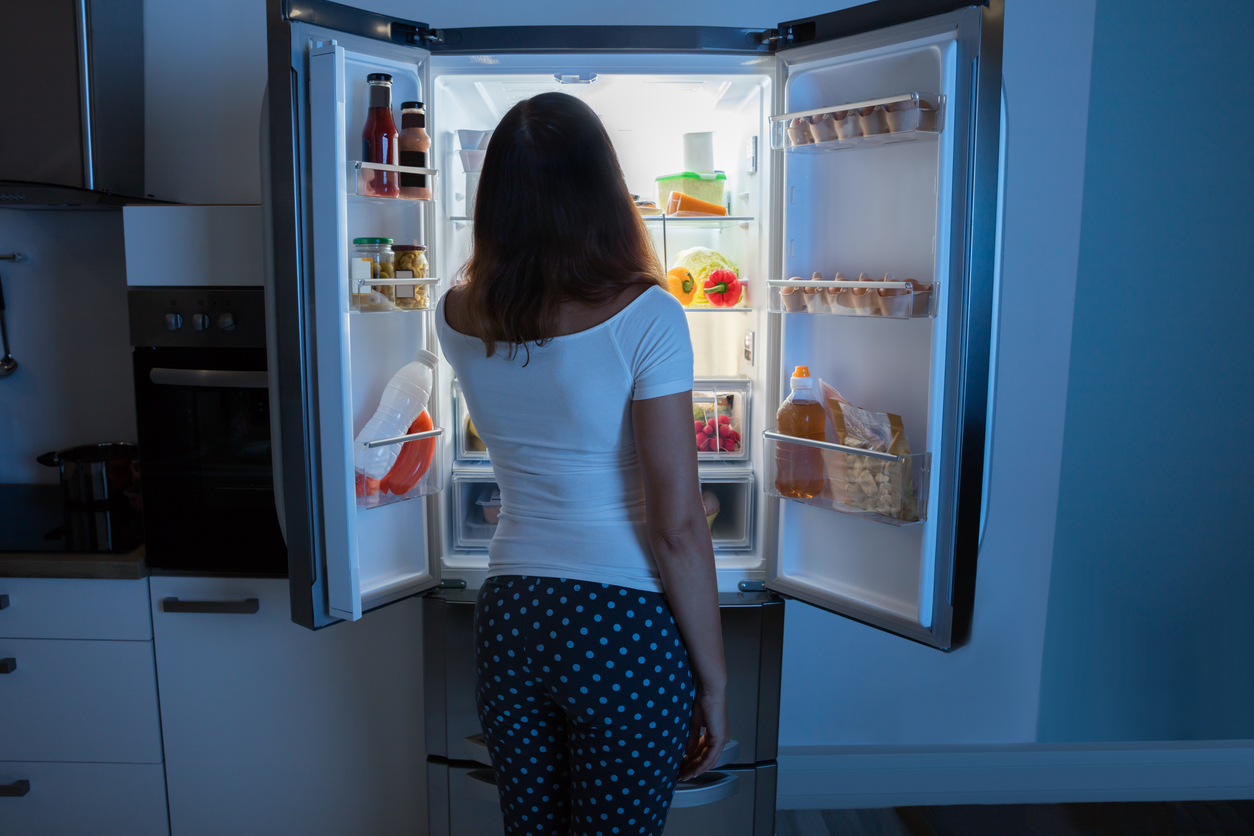
It usually doesn’t happen during the day.
You get through work. You handle responsibilities. You stay on track.
Then evening hits.
You’re home in Gresham after a long day, maybe coming back from I-205 traffic or finishing errands around Happy Valley or Troutdale. The house quiets down. The pace slows.
And suddenly, you’re in the kitchen.
Not because you’re hungry.
But because something in you says it’s time to eat.
This is one of the most common reasons people search for weight loss hypnosis near me — not because they don’t understand nutrition, but because the behavior doesn’t match what they know.

What People Notice First
Nighttime eating doesn’t usually feel extreme.
At first, it looks like:
- Snacking after dinner without thinking
- Craving something specific late at night
- Eating while watching TV or scrolling
- Feeling “off” if you don’t eat
- Telling yourself it’s the last time
Over time, it becomes predictable.
You expect it.
And eventually, it feels automatic.
That’s when frustration builds — because it doesn’t feel like a choice anymore.

Why It Happens Even When You’re Not Hungry
Most people assume nighttime eating is about discipline.
It’s not.
It’s about regulation.
During the day, especially in areas like Gresham and Happy Valley where routines are structured and responsibilities are high, your nervous system stays active.
You’re focused. Productive. Managing tasks.
But that doesn’t mean stress disappears.
It gets stored.
By the time evening arrives, your body looks for a way to downshift.
Food becomes the fastest way to do that.

The Subconscious Loop Behind Night Eating
Over time, the brain builds a connection:
Evening → Food → Relief
That loop becomes automatic.
So even if you’re not physically hungry, your brain signals:
“This is how we relax.”
That’s why nighttime eating feels different from daytime eating.
It’s not about fuel.
It’s about emotional regulation.

Signs This Pattern Is Subconscious
You’re likely dealing with a subconscious loop if:
- You eat at the same time every night
- You don’t feel satisfied, even after eating
- You tell yourself you won’t do it — but still do
- You feel better temporarily, then frustrated
- The behavior feels automatic
At this point, knowledge alone won’t change it.
Because the pattern isn’t conscious.

Why Willpower Doesn’t Work Here
Trying to “stop” nighttime eating usually leads to:
- resisting for a few days
- increased cravings
- eventual relapse
This happens because the underlying need hasn’t changed.
Your nervous system still needs a way to unwind.
Without replacing that pattern, the brain returns to what works.

What Hypnosis Does Differently
Hypnosis addresses the pattern at the source.
At Gresham Hypnosis Center, hypnosis is used to:
- disconnect food from emotional relief
- reduce automatic evening cravings
- retrain the brain’s response to stress
- create alternative ways to relax
Instead of fighting the behavior, hypnosis changes the reason it exists.
That’s why many people exploring hypnosis for weight loss notice that nighttime eating fades without forcing control.
What a Session Focused on Eating Patterns Looks Like
If you’re considering hypnosis, the process is more straightforward than most people expect.
A typical session includes:
1. Understanding your routine
When does the eating happen? What does your evening look like?
2. Identifying the trigger
Stress, boredom, emotional release — the pattern becomes clear.
3. Guided hypnosis session
You are aware and in control. The goal is to shift how your brain responds to evening cues.
4. Rebuilding the pattern
The brain begins associating evening time with calm — not consumption.

How Many Sessions Do Most People Need?
This depends on how established the pattern is.
Generally:
- Some people notice change within 1–2 sessions
- Others benefit from a short series to reinforce the shift
- Long-standing habits may take additional sessions
The key is that hypnosis works at the pattern level, not just behavior.

Why This Often Connects to Stress and Anxiety
Nighttime eating rarely exists on its own.
It often overlaps with:
- anxiety that builds during the day
- mental fatigue
- difficulty unwinding
That’s why many people also explore hypnosis for stress reduction alongside weight-focused work.
When stress decreases, the need for nighttime coping decreases with it.

When to Take It Seriously
If nighttime eating has become:
- consistent
- frustrating
- disconnected from hunger
it’s no longer just a habit.
It’s a pattern.
And patterns don’t change with more effort.
They change with a different approach.

A Clear Next Step
If you’re in Gresham, Happy Valley, or Troutdale and noticing that eating feels automatic at night, it may be time to address what’s driving it.
Many people searching for weight loss hypnosis near me begin by contacting Gresham Hypnosis Center to understand how their specific pattern works and what it would take to change it.
You don’t need more discipline.
You need a pattern that works differently.